
How Roof Leaks Spread Between Units
A homeowner-friendly explanation of how water moves through attached roofs, shared walls, insulation, and roof transitions.
Quick Answer
Roof leaks can spread between units when water enters at a shared roofline, wall flashing, valley, gutter edge, or damaged decking and then travels before it becomes visible.
In our experience, the first ceiling stain is not always directly below the roof opening. Water can move sideways along framing, insulation, and drywall.
A roof inspection helps identify the likely entry point, document the path, and decide whether repair or replacement is the better next step.
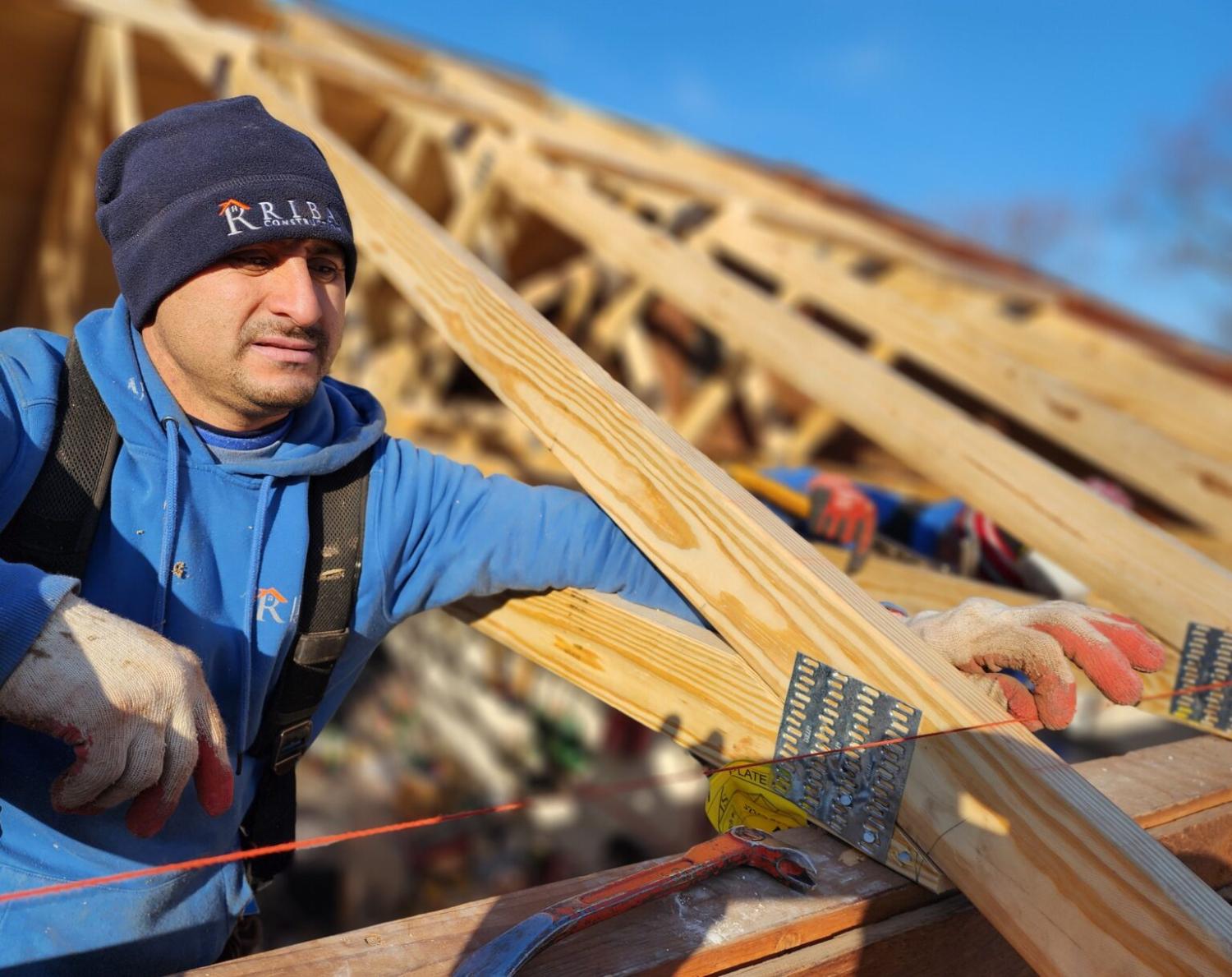
Image recommendation: residential roofing work by RIBA Roofing in Northern Virginia. Alt text: How roof leaks spread between attached townhome units.
A roof leak feels personal when it shows up in your ceiling. But in an attached home, the source may not be as personal as it looks.
Water does not respect property lines. It follows gravity, framing, roof slopes, gaps, and the easiest path through the building.
What we have seen on real projects is that a leak can start in one area and appear in another, especially near shared walls.
This is one reason townhome roof replacement in Fairfax needs careful planning and documentation.
Why Water Travels Before You See It
Rainwater may enter through a small gap, but it does not always drip straight down.
It can run along the underside of roof decking, follow a rafter, soak insulation, or move along drywall seams.
Many customers notice a stain in the bedroom, hallway, or closet first. The actual roof opening may be several feet away.
In our opinion, leak tracing should never rely on guesswork alone.
Decking
Water can travel across plywood before finding a place to drip.
Framing
Rafters and trusses can guide water sideways.
Insulation
Wet insulation can hold water and spread staining slowly.
Shared Walls
Party walls can hide water movement between attached units.
Common Leak Paths In Townhomes
Attached homes often have leak paths that are easy to miss from the ground.
One thing we commonly find is that the leak begins at a roof detail, not in the wide-open shingle field.
The table below shows common ways roof leaks spread between units.
| Leak Path | How It Spreads | What You May Notice |
|---|---|---|
| Shared wall flashing | Water slips behind flashing and follows the wall line. | Stains near an upper wall or ceiling corner. |
| Roof valley | Heavy water flow finds a weak valley seam. | Leak after hard rain or wind-driven rain. |
| Gutter overflow | Water backs up at the roof edge and soaks fascia or decking. | Drips near exterior walls or soffits. |
| Mismatched roof sections | Old and new materials meet poorly. | Leaks near the transition between homes. |
| Pipe boot or vent | Cracked seals let water enter around penetrations. | Small but recurring stains after rain. |
How To Respond When The Leak May Be Shared
If you think a leak may involve another unit, stay calm and document everything.
Based on our real-world experience, clear photos and a written timeline can prevent a lot of confusion.
Do not accuse a neighbor based only on where water appears inside.
If storm damage may be involved, our insurance claim roof replacement in Fairfax page explains helpful documentation steps.
| Step | What To Do | Why It Helps |
|---|---|---|
| 1. Protect the room | Move belongings, catch drips, and avoid unsafe wet electrical areas. | Reduces interior damage while you plan next steps. |
| 2. Take photos | Photograph stains, active drips, roof areas, and exterior conditions. | Creates a record for HOA, insurance, or neighbor talks. |
| 3. Notify the right people | Contact the HOA, property manager, or neighbor if shared areas may be involved. | Keeps communication clear and timely. |
| 4. Schedule inspection | Ask a roofer to inspect shingles, flashing, valleys, vents, and gutters. | Identifies likely roof entry points. |
| 5. Save records | Keep inspection notes, invoices, approvals, and photos. | Helps with future repair, resale, or claim questions. |
Signs The Leak Is More Than A Small Patch
A small leak can still be serious if it keeps returning.
What we usually see is that repeat leaks are a sign the first repair did not solve the real problem or the roof system is aging.
If your roof is older, brittle, or damaged in several areas, replacement may be more practical than another patch.
Repeated Stains
A stain that dries and returns after each storm should be inspected.
Soft Spots
Soft decking or ceiling material can point to longer water exposure.
Moldy Odor
A musty smell may mean water is trapped behind finishes.
Multiple Rooms
Leaks in more than one area can signal a bigger roof issue.
Damaged Flashing
Bent, loose, or poorly sealed flashing can keep leaking.
Brittle Shingles
Shingles that crack during repair may be near the end of their life.
Helpful Sources And Local Context
A roof is the top covering of a building and includes materials and construction that protect the home from rain, snow, sun, wind, and temperature changes. That broad definition is why we look beyond shingles when inspecting attached homes. For general background, see the public overview of a roof.
For homeowners in community associations, written rules matter. The Virginia Common Interest Community Board and the Virginia Property Owners’ Association Act are useful places to start for general context.
These sources do not replace your own HOA documents, insurance policy, or professional advice. They simply give helpful background for homeowners who want to understand why roof responsibility can be more detailed in attached communities.
How Roof Leaks Spread Between Units Field Notes
In our experience, look for small stains before they become large stains. A small brown ring on drywall may be the first sign of a roof detail that needs attention.
In our experience, ask for photos, not just a verbal explanation. Photos help everyone remember what was found after the rain has stopped.
In our experience, do not ignore gutters. In townhome communities, gutter overflow can affect fascia, siding, walkways, and neighboring units.
In our experience, check the attic if it is safe and accessible. Wet insulation, dark decking, and daylight at penetrations can offer clues.
In our experience, remember that matching matters. A roof repair that looks fine up close may stand out from the street if the shingle color is wrong.
In our experience, think about resale. Clear roof records can help future buyers understand what was repaired or replaced.
In our experience, keep HOA approval in one folder. Store approvals, color names, invoices, warranty papers, and photos together.
In our experience, ask how cleanup is handled. Nail magnets, tarps, and debris control are especially important where homes and cars are close together.
In our experience, plan for noise. If someone works from home, has small children, or has pets, installation day may be easier with a plan.
In our experience, do not wait for repeated leaks. Repeated water entry can damage decking, insulation, drywall, paint, and trim.
In our experience, if the issue may involve a shared element, communicate early. A short message to a neighbor or HOA can prevent surprises.
In our experience, choose clarity over speed. Fast work is good, but clear scope, material approval, and documentation matter more.
Common Mistakes To Avoid
Common Mistake
Do not assume the visible leak location proves who is responsible. Water can travel before it shows inside, especially in attached homes.
Do not choose roof color, shingle style, or installation timing before checking HOA rules when the home is in a community association.
Pro Tip
Create one simple roof folder with inspection photos, HOA approval, estimate, invoice, warranty details, and any insurance notes. It helps now, and it can help when you sell the home later.
Need Help With A Townhome Roof?
If you are dealing with a leak, shared roofline, HOA approval, or an aging attached-home roof, RIBA Roofing can inspect the roof and explain your options in plain language.
Request A Roof InspectionRelated Townhome Roofing Resources
For local help, visit RIBA Roofing or learn more about Fairfax roofing services.
If you are comparing repair, replacement, shared responsibility, and HOA rules, our main guide to townhome roof replacement in Fairfax is the best next page to read.
Frequently Asked Questions
Can roof leaks spread between townhome units?
Yes. Water can move through shared rooflines, wall flashing, decking, framing, insulation, and connected gutters before it becomes visible.
How do I know where a townhome roof leak started?
A roof inspection can help identify likely entry points. Photos, attic inspection, exterior inspection, and rain patterns all help.
Should I contact my HOA for a roof leak?
Yes, if your community manages exterior roofs or if the leak may involve a shared component. Review your HOA documents and notify the property manager when needed.
Can water travel sideways in a roof?
Yes. Water can travel along roof decking, rafters, insulation, drywall, and wall lines before dripping into a room.
Is a shared leak always my neighbor’s fault?
No. The visible leak location does not prove fault. The source must be inspected and responsibility should be checked against governing documents.
Can RIBA Roofing help trace a roof leak?
Yes. RIBA Roofing can inspect visible roof areas, document damage, and explain repair or replacement options for Fairfax townhomes.
Final Thoughts
How Roof Leaks Spread Between Units is easier to understand when you slow the problem down and look at the roof as a full system.
In our experience, attached-home roofing works best when homeowners have clear documentation, careful inspection notes, and a contractor who understands shared rooflines.
If you want help looking at a townhome, duplex, or attached-home roof in Fairfax, RIBA Roofing can walk you through the next step.
More Real-World Notes
What we have seen is that clear communication helps every part of an attached-home roof project. The homeowner, neighbor, HOA, insurance contact, and contractor can all make better decisions when the roof condition is documented with photos and explained in simple language.
In our opinion, the best roof decision is not always the fastest decision. It is the decision that protects the home, follows the community rules, and gives the owner a clear record for future repairs, resale, or warranty questions.
What we have seen is that clear communication helps every part of an attached-home roof project. The homeowner, neighbor, HOA, insurance contact, and contractor can all make better decisions when the roof condition is documented with photos and explained in simple language.
In our opinion, the best roof decision is not always the fastest decision. It is the decision that protects the home, follows the community rules, and gives the owner a clear record for future repairs, resale, or warranty questions.
What we have seen is that clear communication helps every part of an attached-home roof project. The homeowner, neighbor, HOA, insurance contact, and contractor can all make better decisions when the roof condition is documented with photos and explained in simple language.
In our opinion, the best roof decision is not always the fastest decision. It is the decision that protects the home, follows the community rules, and gives the owner a clear record for future repairs, resale, or warranty questions.
What we have seen is that clear communication helps every part of an attached-home roof project. The homeowner, neighbor, HOA, insurance contact, and contractor can all make better decisions when the roof condition is documented with photos and explained in simple language.
In our opinion, the best roof decision is not always the fastest decision. It is the decision that protects the home, follows the community rules, and gives the owner a clear record for future repairs, resale, or warranty questions.
What we have seen is that clear communication helps every part of an attached-home roof project. The homeowner, neighbor, HOA, insurance contact, and contractor can all make better decisions when the roof condition is documented with photos and explained in simple language.
In our opinion, the best roof decision is not always the fastest decision. It is the decision that protects the home, follows the community rules, and gives the owner a clear record for future repairs, resale, or warranty questions.
What we have seen is that clear communication helps every part of an attached-home roof project. The homeowner, neighbor, HOA, insurance contact, and contractor can all make better decisions when the roof condition is documented with photos and explained in simple language.
In our opinion, the best roof decision is not always the fastest decision. It is the decision that protects the home, follows the community rules, and gives the owner a clear record for future repairs, resale, or warranty questions.