
Do I Need a Permit for Roof Replacement in Virginia?
Fairfax County requirements can depend on whether the job is shingle replacement, roof sheathing, structural repair, or a change to the roof itself.
Homeowners often ask about permits after they receive a roof estimate. The short answer depends on what the contractor is actually doing. A like-for-like shingle replacement is different from replacing roof framing, changing the roof shape, or repairing a large area of damaged sheathing.
This guide focuses on Fairfax County because its rules apply to many homes in Fairfax, Burke, Vienna, and nearby communities. Other Virginia localities may use different processes. A permit exemption also does not replace HOA approval, condominium requirements, historic review, or other approvals that may apply to the property.
Use the county’s current information as the final reference. The scope in this article is general guidance and should not be treated as a permit determination for a specific address.
When a roof shingle replacement may not need a permit
Fairfax County’s Does My Project Require a Permit? page lists replacement of roof shingles as residential work that does not require a permit. It also lists replacement of less than 256 square feet of roof plywood as work that may not require a permit, with an exception when fire-rated construction is required, such as in some townhomes.
That wording is important. A “roof replacement” estimate may mean removal and replacement of the roof covering only. It may also anticipate sheathing, structural, or design work. Have the contractor define the actual work rather than relying on the project label.
For a basic shingle replacement, have the roofer confirm in writing whether the scope includes only roof covering or also roof deck, framing, chimney, dormer, solar, or other work. Then check that description against current county guidance. If you are uncertain, Fairfax County Land Development Services can help clarify what record or approval applies.
A homeowner should not assume that “the old roof had no permit” answers the question for new work. Current rules, the scope, and the building type control the review.
Work that can change the permit answer
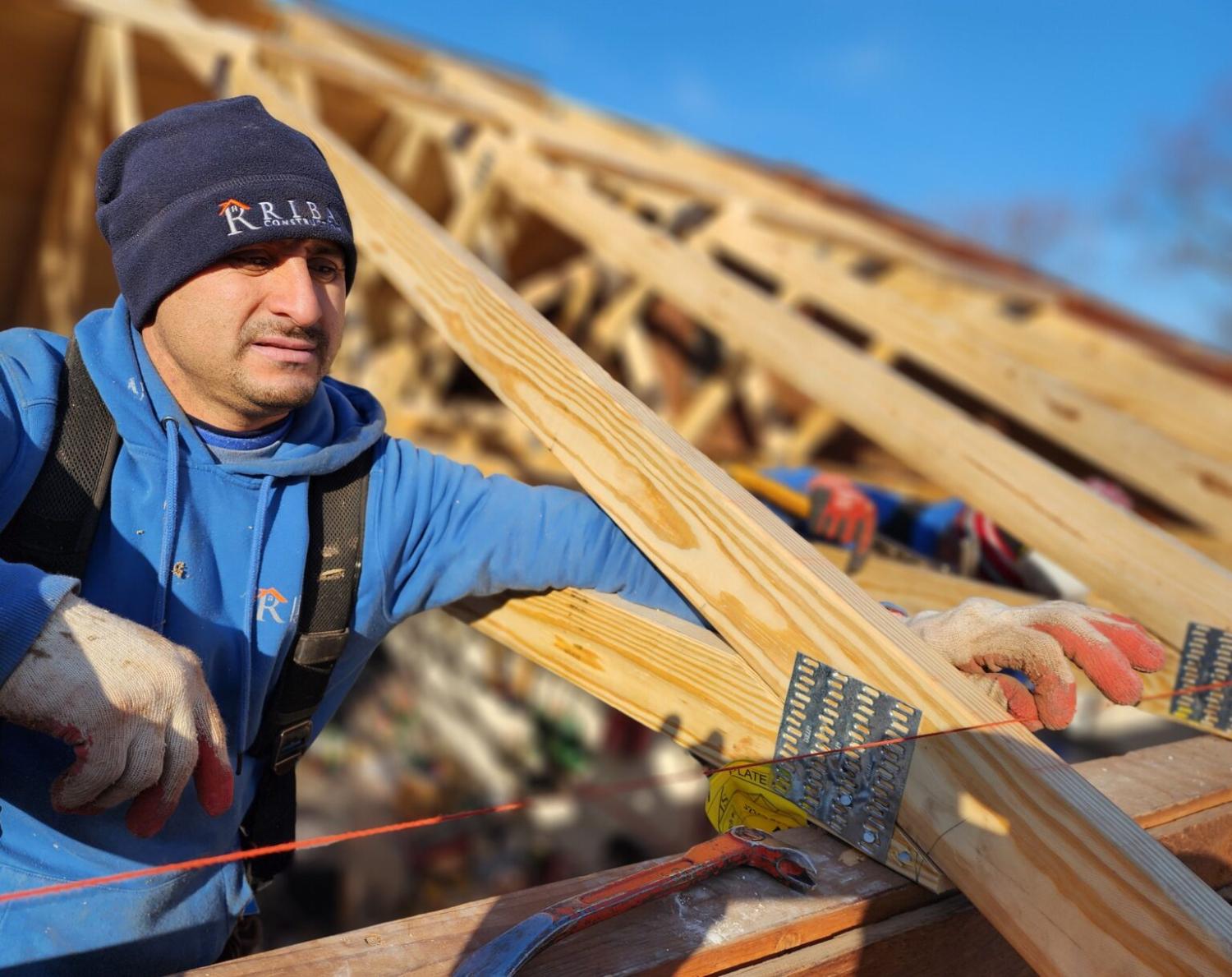
Structural work is different from changing shingles. Fairfax County says building permits are required for work such as roof dormers and structural roof repairs, including trusses or larger areas of roof decking. The county’s code compliance page also describes roof structural work as an example where a permit may be needed.
Discuss the following items with the contractor and county before the job starts:
- Replacing a large section of roof sheathing or decking
- Repairing or changing rafters, trusses, or other structural members
- Adding a dormer, changing roof geometry, or making a new opening
- Work that changes a required fire-rated roof or wall assembly
- Roof-mounted solar panels or new electrical equipment
- Work at a condominium, apartment, or commercial property that may be classified differently
These examples are not a complete list. The county states its online guidance is general and not exhaustive. If the scope changes after demolition exposes damage, stop and confirm who will determine whether additional approval is needed before structural repairs proceed.
Understand the difference between roof covering and roof structure
The roof covering is the visible weather layer: shingles, metal panels, or another roofing material. Beneath it are components such as underlayment, flashing, roof sheathing, rafters, or trusses. Replacing the covering does not automatically mean the structure is being changed.
Roof decking is the sheet material attached to the framing. If it is soft, broken, or damaged by moisture, a contractor may recommend replacing part of it. The area and type of construction matter when determining whether a permit is required. Fairfax County identifies a limit for some residential plywood replacement and notes an exception for fire-rated construction such as townhomes.
Have the roofer describe how hidden damage will be handled. The contract should say how the crew will document it, how additional work is priced, and who will confirm permit requirements if the work expands. A contractor should not begin a larger structural scope based on an informal verbal decision.
Townhomes and condominiums need extra checking
Attached homes can have shared or fire-rated construction details that do not appear in a detached home. The county specifically cautions that replacing less than 256 square feet of roof plywood may have an exception when fire-rated construction is required, as in some townhomes.
A condominium or apartment building can also be treated as commercial for building-code purposes, depending on its configuration. Fairfax County explains that some apartment and condominium properties are considered commercial even when they are residential in everyday use.
Before scheduling work, confirm with the property manager or association who owns and maintains the roof. Get the current requirements for materials, color, access, work hours, fire separations, and written approval. If the roof is a common element, individual owners may not control the repair decision.
For a townhome project, bring the association’s documents and the contractor’s written scope to the permit conversation. That helps the county and association understand whether the proposal covers only shingles or includes sheathing and other construction. Our guide to townhome roof replacement in Fairfax explains the other coordination steps homeowners should consider.
Permits, HOA approvals, and inspections are not the same
A permit is a government approval for covered work. An HOA or condominium review is a separate process governed by association documents and applicable laws. One approval does not necessarily replace the other.
Some roof jobs may not need a county permit but still need association approval for product, color, or construction access. A project that does require a permit may also need board or architectural approval. Confirm the requirements with both organizations that apply to your home.
If the contractor says no permit is needed, confirm which rule applies and whether they confirmed it for the complete scope. If a permit is required, confirm who will submit it, what paperwork will be provided, and whether the estimate includes the cost. Keep the approval, permit number, and final inspection record with the roofing contract.
Ask these permit questions before work begins
What exactly is included?
Confirm whether the scope covers shingles only, sheathing, framing, ventilation, a dormer, or other structural changes.
Who checked the county rule?
Verify whether the contractor reviewed current Fairfax County guidance or spoke with Land Development Services.
What if hidden damage appears?
Agree on documentation, pricing, approval, and a pause while permit requirements are checked.
Does the property have special rules?
Confirm townhome fire-rated assemblies, condominium common elements, HOA standards, and any historic review.
These questions are useful even when the county confirms no permit is needed. They help ensure that the work described in the contract matches what the crew will actually do.
Fairfax County roof work overview
| Project scope | What county guidance indicates | Homeowner action |
|---|---|---|
| Residential shingle replacement | Listed by Fairfax County as work that generally does not require a permit | Confirm the bid is covering roof covering only and verify current guidance |
| Small plywood replacement | Less than 256 sq. ft. may be exempt, subject to the county’s fire-rated-construction exception | Check the area and whether the property has a rated assembly |
| Large roof-deck or structural repair | May require a building permit, especially when structural components are affected | Ask the county before proceeding with the expanded scope |
| Dormer or roof-shape change | County guidance identifies roof dormers as permit work | Discuss drawings, zoning, and building review before construction |
| Townhome, condo, or apartment project | Fire-rating and building classification may affect requirements | Coordinate with the association or manager and county staff |
| Roof-mounted solar or electrical work | Separate approvals may apply to solar and electrical components | Confirm the roofing and trade-permit requirements for the combined scope |
How to verify the requirement yourself
- Request a written description from the contractor of every work item.
- Separate roof covering from sheathing, framing, openings, solar, and electrical work.
- Check the current Fairfax County permit page and permit library.
- Contact Land Development Services if any part is unclear or the scope is unusual.
- For an HOA or condo, request the association’s approval process and written requirements.
- Keep the decision, permit record, and approved scope with your contract.
Fairfax County lists Land Development Services at 703-222-0801 and provides online permit information. It encourages property owners to review all applicable regulations and notes that additional approvals may apply based on location and project size.
If your property is outside Fairfax County, start with the building department for the city or county where the home sits. Northern Virginia jurisdictions do not necessarily share the same online process or exemption language.
Keep a record of the permit decision
Once you have an answer, save the county email, permit number, application, or other record with the contract. If the county confirms that the work does not require a permit, keep a copy of the guidance or note the person and date of the conversation. This can help if the project scope is questioned later or if your home is sold.
If the crew discovers damage after tear-off, update the record. A change from replacing shingles to repairing a large area of deck or framing may require a fresh permit review. Have the contractor pause the changed work, take photos, and explain the added scope before proceeding. If a permit applies, confirm that the application describes the revised work and that any required inspections are scheduled.
At closeout, request copies of permits and final inspection records that relate to the project. These documents do not replace the roofing warranty or paid invoice, but together they help show what was approved and completed.
Choosing a contractor who can explain the process
Permit coordination is one part of a complete roofing proposal. Have the contractor explain how they document the roof, communicate changes, protect your property, and provide closeout information. Request the business’s Virginia license details and verify them through DPOR. A clear answer is more useful than a broad promise that “everything is handled.”
For a roof replacement, compare estimates using the same assumptions for tear-off, underlayment, flashing, ventilation, decking allowances, debris, and cleanup. Read the payment and change-order language carefully. If the job is part of a storm claim, the insurer—not the roofing contractor—decides coverage.
RIBA Roofing & Exteriors begins with a free consultation to listen to the concern, assess the roof, and explain professional recommendations. Review the Fairfax roofing service hub, roof replacement options, and roof inspection service for related information.
Frequently asked questions
Does Fairfax County require a permit to replace roof shingles?
Fairfax County lists replacement of residential roof shingles as work that does not require a permit. Confirm that the project is limited to the roof covering and check current requirements for any additional work.
Do I need a permit to replace roof decking?
It depends on the area, whether the work is structural, and whether fire-rated construction applies. Fairfax County identifies a limited exemption for some plywood replacement and states exceptions can apply. Contact the county for the exact scope.
Do townhomes have different roof permit rules?
They can. Fairfax County notes that fire-rated construction, such as in some townhomes, may change the roof plywood exemption. Association rules and shared roof responsibilities can also apply.
Does roof repair require a permit in Fairfax County?
It depends on the repair. Shingle replacement, structural work, roof sheathing, and roof-shape changes can be treated differently. Describe the exact work to Fairfax County Land Development Services.
Does an HOA approval replace a county permit?
No. Association approval and government permits are separate processes. A project may need one, both, or neither depending on the scope and property documents.
Who applies for a roofing permit?
Confirm with the contractor who is responsible. Fairfax County says property owners may apply for permits in some cases and recommends a properly licensed contractor as the responsible party where appropriate. Confirm the current process with the county.
Where can I ask Fairfax County a permit question?
Contact Fairfax County Land Development Services at 703-222-0801 or use the county’s permit guidance and permit library online.
Get a clear roof scope before work begins
A roof inspection can help distinguish shingle replacement from repairs that involve decking or structure. Call RIBA Roofing & Exteriors at 703-978-7663 or request a consultation.
Related reading: questions to ask a roofing contractor, contractor red flags, and townhome roof replacement in Fairfax.