
Townhome Roof Replacement in Fairfax, VA
Plan an attached-home roofing project with a defined scope, clear association coordination, and a practical work schedule.
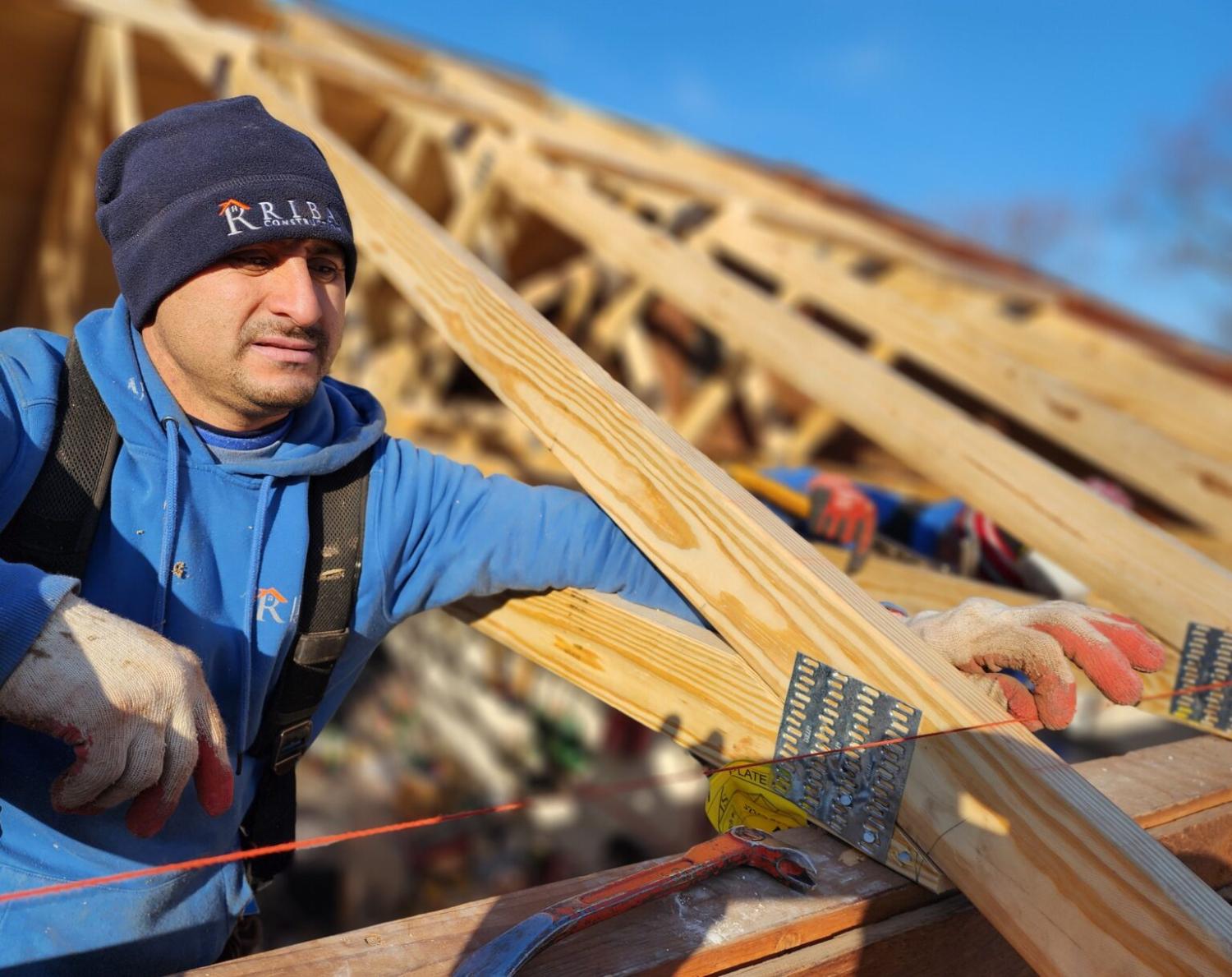
Replacing a roof on an attached home involves more than selecting shingles. The roof may connect to neighboring units, shared walls, common elements, or association-maintained areas. A well-planned project identifies those details before material delivery and crew setup.
In our experience, the first useful question is not “Which shingle color do you like?” It is “Who owns and maintains this roof, and what exactly does the association require?” The answer can differ between communities, even when the homes look similar from the street.
RIBA Roofing & Exteriors serves homeowners in Fairfax and Northern Virginia. We begin with a consultation to listen, inspect the roof concerns, and explain repair or replacement options based on the visible conditions.
What townhome roof replacement includes
A roof replacement typically removes the existing roof covering and installs a new roofing system over the approved areas. The exact scope depends on the roof and contract. It may include tear-off, underlayment, flashing, shingles, ventilation components, edge details, disposal, and cleanup.
For an attached home, the contractor also needs to understand where one unit’s roof begins and ends, how the roof meets shared walls, and whether the work affects a rated assembly. The proposal should identify the work area and note any coordination assumptions.
A replacement plan should answer:
- Which roof section is included, and who approved that boundary?
- What existing materials will be removed and hauled away?
- Which shingle, underlayment, flashing, and ventilation products are specified?
- How will the crew protect nearby siding, windows, landscaping, and parked cars?
- How will concealed sheathing damage be documented, priced, and approved?
- What warranties and closeout records will the owner receive?
Start by confirming roof ownership and responsibility
Some townhome communities assign roof maintenance to the individual owner. Others treat some or all of the roof as a common element or association responsibility. The declaration, maintenance chart, bylaws, and current board policies can explain who may authorize work and who pays for it.
Request the current roof responsibility documents from your association or property manager. Clarify whether the repair is limited to one unit, part of a larger scheduled replacement, or a shared project. If damage crosses a boundary or affects adjacent areas, confirm how the association wants the condition documented.
Do not assume that a neighbor’s recent roof replacement used the same process that applies to your home. Rules, approved colors, contractors, and reserve-funded projects can change. Request written direction before signing a contract or ordering materials.
For a condominium, the association may control exterior changes and common elements under its governing documents and applicable law. Virginia Code § 55.1-1956 describes association powers over some exterior changes and common elements. The correct requirements depend on the specific property documents, so confirm with your association or legal adviser where needed.
Coordinate HOA or condo approval before scheduling
Confirm what the association needs to review. A submission may call for a product name, color sample, contractor information, roof plan, insurance certificate, work dates, or neighbor notice. The community’s application should state how long review usually takes and whether work can begin after approval.
Keep a copy of the approval and any conditions. If the board approves one color or shingle line, do not assume a substitute is automatically acceptable. If the contractor finds a product is unavailable, pause to confirm the replacement choice before installation.
Association approval is separate from a government permit. A project can require HOA review even when the county says the shingle replacement itself does not need a permit. It can also need both, depending on the work and property.
For helpful steps for Fairfax homeowners, see our questions to ask a roofing contractor and our guide to roof replacement permits in Virginia.
Understand permit and fire-rating questions
Fairfax County lists residential shingle replacement as work that may not require a permit, but structural work and certain sheathing replacements can have different requirements. The county notes that its under-256-square-foot roof plywood exemption can have an exception when fire-rated construction is required, such as in some townhomes.
That makes it important to define the actual scope. Confirm whether the proposal covers the roof covering only or also includes roof deck, framing, a dormer, solar work, or other changes. If hidden damage appears after tear-off, the contractor should document it and confirm the next approval step before doing additional structural work.
Use Fairfax County’s current permit guidance or contact Land Development Services for a determination. If the home is in a different Northern Virginia jurisdiction, contact that local building department instead.
Inspection and replacement planning
A roof inspection helps establish whether repair or replacement is the right next step. We review the visible roofing, edges, valleys, flashing, penetrations, and signs of water entry. Where access allows, attic conditions and visible sheathing may help explain a leak or moisture concern.
Have the contractor show photographs and explain what they mean. A missing shingle, failed pipe boot, or localized flashing issue may call for repair. Widespread wear, repeated leaks, brittle materials, or damage across several areas can point to replacement. The condition of the roof, not the community’s last project, should guide the recommendation.
If the roof is shared or extends across several units, agree on inspection access and documentation. The association may want a coordinated assessment before one owner commissions a separate project. Keep the photos and estimate with the approval request so decision-makers can review the same facts.
Plan the crew access and work area
Townhome streets and driveways can be tight. Before the work date, discuss where the crew will park, where materials will be staged, and how a dumpster or trailer will affect access. Confirm whether the association needs to reserve spaces or notify nearby residents.
Move vehicles, patio furniture, grills, planters, and fragile items away from the work zone. Close windows and keep pets indoors. If the crew will pass through a shared walkway or use common areas, confirm the allowed route and protection measures.
Roof removal is noisy. Confirm how the contractor will communicate start time, weather delays, and a schedule change. You usually do not need to leave your home, but it helps to plan calls, pets, and other sensitive activities around the loudest part of the work.
Confirm how the contractor will contain debris and how cleanup will be checked. A magnetic nail sweep around the work area is useful, but the site plan should also account for neighbor parking, shared landscaping, and any play spaces.
Compare repair and replacement options
Not every roof concern requires a full replacement. A repair may make sense when damage is limited and the surrounding roof is in usable condition. Replacement may be more practical when the roof has widespread deterioration or the repair history shows recurring issues.
| Roof condition | Possible path | Questions to ask |
|---|---|---|
| One localized leak or failed flashing | Targeted repair may be appropriate | What caused the leak, and what nearby materials were inspected? |
| Broad wear across the roof surface | Compare full replacement with remaining life | Which areas are failing, and what does replacement include? |
| Damage at a shared wall or roof boundary | Coordinate assessment with the association | Who owns the affected detail, and who approves the repair? |
| Soft or damaged sheathing | Document, price, and check permit needs | How much is affected and who approves added work? |
| Storm damage on part of one unit | Inspect and document before choosing a scope | Does the condition affect neighboring units or common elements? |
Request separate prices when more than one option is reasonable. If the contractor recommends replacement, have them show the conditions that make a repair unreliable. If the roof is being considered for insurance, contact the insurer directly about coverage and keep the claim decision separate from the contractor’s estimate.
Our roof replacement versus ongoing repairs guide covers the cost and condition questions in more detail.
How the RIBA consultation works
- Listen: We start by hearing what you have noticed, when it started, and whether the association has already issued instructions.
- Inspect: We review the visible roofing and discuss access limitations or shared areas.
- Explain: We show what we found and separate urgent concerns from planned replacement needs.
- Write the scope: The proposal describes the work, products, exclusions, payment terms, and change-order process.
- Coordinate: The homeowner confirms association approval and the required scheduling details with the community.
- Complete and review: After work, we discuss cleanup, project records, and warranty documents under the agreement.
RIBA is a family-owned and operated company established by Richard and Basia. We begin with a free consultation and make recommendations based on the roof and project needs. Our goal is to explain the options so the homeowner can decide what fits.
Frequently asked questions
Who pays for a townhome roof replacement?
It depends on the governing documents and how the community assigns responsibility. Check the declaration, maintenance schedule, association policies, and any current board notice.
Do I need HOA approval to replace my townhome roof?
Many communities review exterior materials or colors, but the requirements are property-specific. Get the association’s current written process before ordering materials or scheduling work.
Does Fairfax County require a permit for a townhome roof replacement?
Fairfax County lists residential shingle replacement as work that generally does not require a permit, but fire-rated construction, structural repairs, or roof-deck replacement can change the answer. Confirm the actual scope with the county.
Can I replace just my unit’s part of a shared roof?
Possibly, but first confirm ownership and responsibility. A separate repair can affect shared boundaries, materials, flashing, or warranties. Get association direction in writing.
How long does a townhome roof replacement take?
Timing depends on the roof size, complexity, weather, materials, and how many units are included. Request a schedule from the contractor based on the site inspection and association requirements.
Can the contractor help with HOA documents?
A contractor can provide scope details, product information, insurance documents, and samples as requested. The homeowner or association should confirm the application rules and obtain required approval.
Will insurance pay for a townhome roof?
Coverage depends on the policy, cause of damage, and insurer’s review. Contact the insurer about coverage and responsibility before assuming that replacement will be paid.
Planning a townhome roof project?
Talk with RIBA Roofing & Exteriors about the roof condition, scope, and next steps. Call 703-978-7663 or request a Fairfax consultation.
Request a townhome roof consultation
Also see our roof replacement service, roof inspection page, and contractor selection guide.