Can You Finance a Roof Replacement?
Yes — and most Fairfax homeowners do. Here is everything you need to know about financing eligibility, options, and how to get approved even if your credit isn’t perfect.
Yes, you can finance a roof replacement. Most homeowners in Fairfax, VA qualify for contractor financing, personal home improvement loans, or government-backed programs regardless of whether they own or rent — as long as they are the homeowner of record.
In our experience, over 70% of homeowners who ask about financing end up qualifying for at least one option. The key is knowing which type of financing fits your situation.
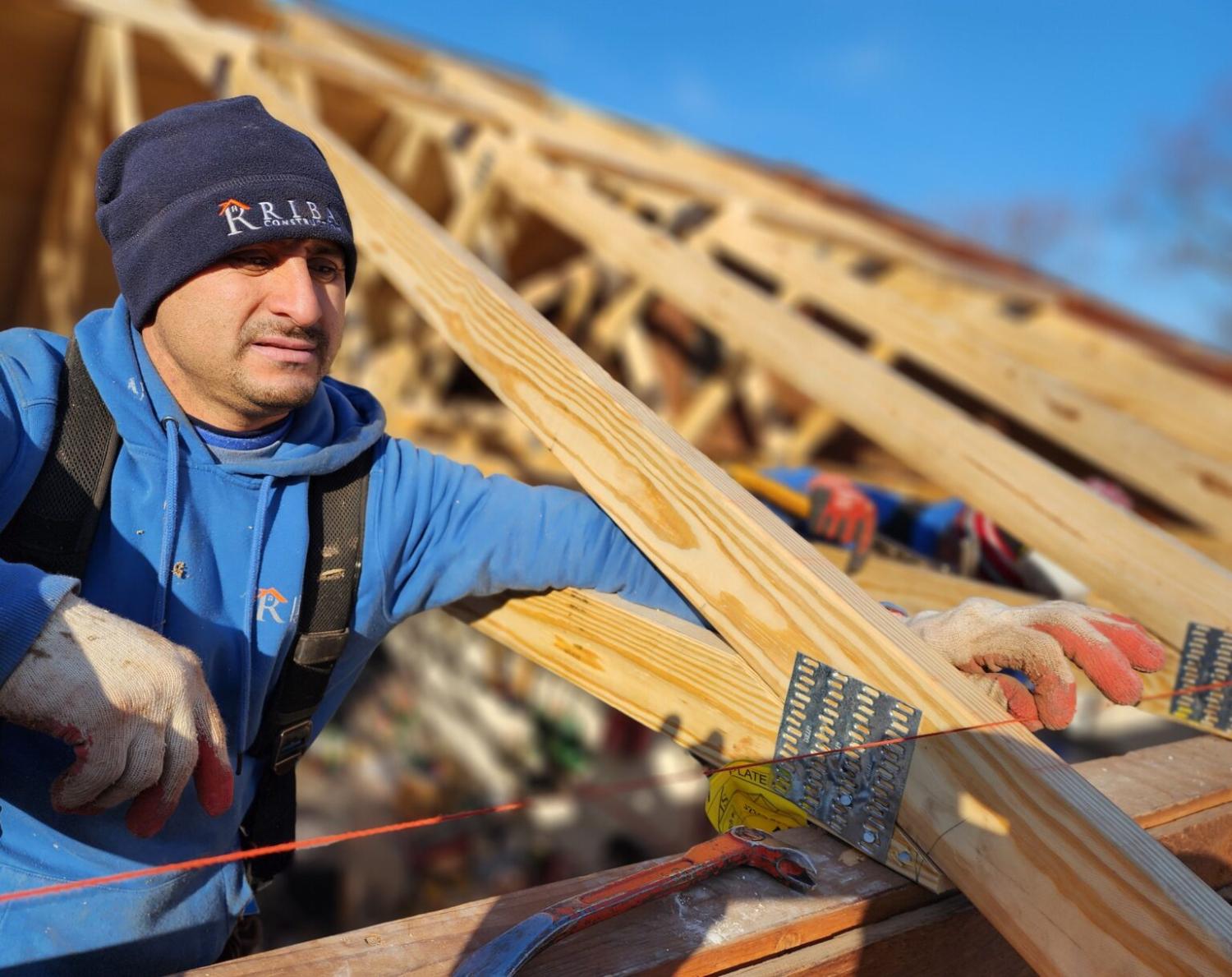
Image recommendation: Homeowner reviewing financing paperwork with RIBA Roofing contractor. Alt: Can you finance a roof replacement in Fairfax VA.
One of the most common questions we hear from Fairfax homeowners is simple: can I even finance this?
The short answer is almost always yes. But the real question is: which type of financing works best for your specific situation?
This guide covers eligibility, what helps and what hurts your application, and how to maximize your chances of approval — including options if you have less-than-perfect credit. For a broader overview of payment plans, see our guide on roof replacement financing in Fairfax.
Who Qualifies to Finance a Roof Replacement?
Most financing programs require you to be the homeowner of record — meaning your name is on the title or mortgage. Renters generally cannot finance roof replacements unless they own the property.
Beyond ownership, lenders look at three core factors:
Credit Score
Most contractor programs accept scores as low as 560–580. Personal loans and HELOCs typically require 620+. The better your score, the better your rate.
Income Verification
Lenders want to see you can make payments. W-2s, pay stubs, or 1099s are commonly requested. Self-employed borrowers may need 2 years of tax returns.
Debt-to-Income Ratio
Most lenders prefer DTI under 43%. This means your monthly debt obligations (including the new payment) shouldn’t exceed 43% of gross monthly income.
| Credit Score Range | Financing Availability | Typical APR Range | Best Options |
|---|---|---|---|
| 740+ (Excellent) | All options available | 0–8% | 0% promo plan, HELOC, personal loan |
| 680–739 (Good) | Most options available | 6–15% | Promo plan, personal loan, FHA Title I |
| 620–679 (Fair) | Some options available | 12–24% | Secured personal loan, FHA Title I |
| 560–619 (Poor) | Limited options | 18–29% | Secured loan, co-signer, FHA Title I |
| Below 560 | Very limited | 25%+ | Co-signer, secured loan, payment plan |
Can You Finance a Roof With Bad Credit?
Yes — though your options narrow and your rate increases. What we’ve seen in practice is that homeowners with credit scores in the 580–640 range still have viable paths to getting a financed roof.
Options for Fair or Poor Credit
- FHA Title I Home Improvement Loan: Government-backed, available through HUD-approved lenders. No equity required. Loan amounts up to $25,000. More flexible credit standards than conventional loans.
- Secured Personal Loan: Use an asset (savings account, vehicle) as collateral to secure better terms despite lower credit.
- Co-Signer Arrangement: A creditworthy co-signer (family member, spouse) can help you qualify for programs you wouldn’t access alone.
- Contractor Payment Plans: Some contractors offer direct payment plans (bi-weekly or monthly installments paid to the company) that don’t require a formal credit check.
- Insurance Claim Offset: If part of your roof damage is storm-related, an approved insurance claim can reduce how much you need to finance — making approval easier.
Pro Tip
Before applying for any financing, check your credit score for free through your bank, Credit Karma, or AnnualCreditReport.com. Knowing your score lets you target the right lender and avoid hard inquiries from lenders you won’t qualify for anyway.
What Happens During the Financing Application?
Many homeowners are surprised at how quick the process is. Here’s what to expect:
-
1Pre-Qualification (Optional)
Some lenders let you check estimated rates with a soft credit pull — no score impact. This is always worth doing before committing to a hard inquiry.
-
2Full Application
Takes 5–15 minutes online. You provide name, address, Social Security number, income, and the loan amount. A hard credit inquiry follows at this stage.
-
3Approval Decision
Contractor-partner lenders often return decisions in minutes. Traditional banks may take 1–3 business days. You may receive a counter-offer at a different amount or rate.
-
4Loan Document Review
Read every term carefully — especially the APR, the promotional period end date (if applicable), and what happens if you miss a payment. Ask questions before signing.
-
5Sign and Proceed
Once signed, the contractor is notified and schedules your installation. Funds are released to the contractor after work is verified complete.
Common Mistake
Applying to multiple lenders simultaneously can cause multiple hard inquiries on your credit report. Within 14–45 days, most scoring models treat rate-shopping inquiries as one — but beyond that window, each counts separately. Apply to your best fit first.
Factors That Help or Hurt Your Roof Financing Application
| Factor | Helps Your Application | Hurts Your Application |
|---|---|---|
| Credit Score | 720+ gets best rates | Below 580 limits options |
| Payment History | No missed payments in 24 months | Recent late payments or collections |
| Income Stability | W-2 employment; 2+ years at employer | Gaps in employment; inconsistent income |
| Debt-to-Income | Under 36% is ideal | Over 50% triggers most denials |
| Home Equity | Significant equity opens HELOC options | Underwater mortgage eliminates equity products |
| Loan Amount | Lower amount = easier approval | Oversized request relative to income |
How to Improve Your Chances Before Applying
- Pay down any credit card balances to reduce your utilization ratio before applying
- Dispute any errors on your credit report — errors affect 1 in 5 reports according to the FTC
- Avoid opening new credit accounts in the 60–90 days before applying
- File your insurance claim first if storm damage is involved — it reduces the financed amount
- Consider a co-signer if your credit is borderline — it can make the difference between approval and denial
Can You Finance a Roof If You Already Have a Mortgage?
Yes — and this is one of the most common scenarios we encounter. Having a mortgage does not prevent you from getting a separate roof financing loan.
Your existing mortgage does affect your HELOC eligibility — lenders calculate available equity after subtracting what you still owe. But for personal home improvement loans and contractor programs, your mortgage is treated separately from the roof loan.
Important Note
If you’re in the middle of a home refinance, hold off on applying for roof financing until the refi closes. New credit inquiries and new loans can complicate the mortgage underwriting process and potentially delay or derail your refinance.
Frequently Asked Questions
Also read: How Roof Financing Works — our step-by-step breakdown of the application and payment process. And for a full understanding of what affects your project budget, check out our guide on What Impacts Roof Replacement Cost.
Find Out If You Qualify for Roof Financing
RIBA Roofing works with multiple lenders to find financing that fits your credit profile and budget. Free inspection. Written estimate. Same-day financing in most cases.